Inserts
New, used, or broken. Coatings don't add value but don't hurt. Keep them dry and separate from steel and HSS.
Why is one bucket of carbide worth more than another? This guide explains the grades, forms, sorting, and market factors that determine tungsten carbide scrap value — and exactly what to send Ironcrest for an accurate quote.
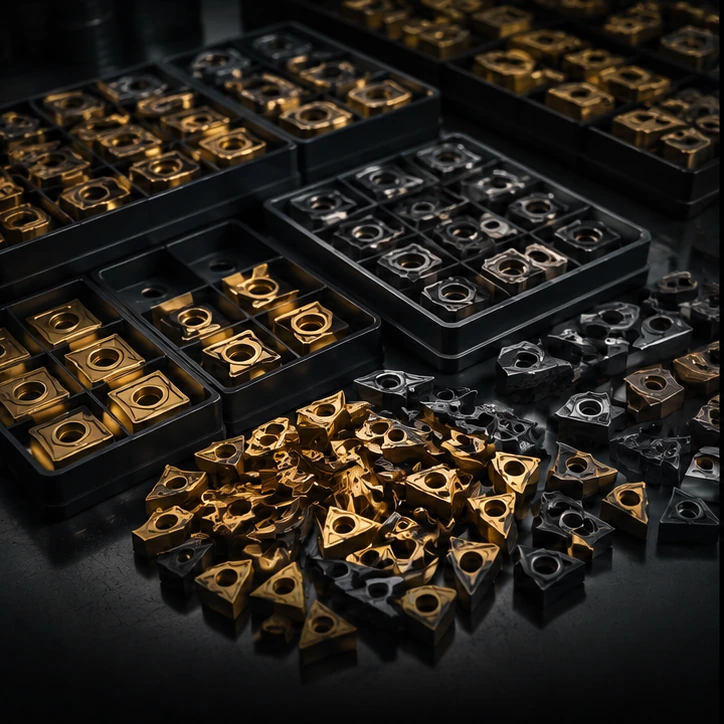
Carbide scrap is not priced off a single number the way a commodity like copper wire is. Every lot is evaluated on what is actually in it. These are the six factors that determine what your material is worth.
Cemented carbide is tungsten carbide grains held together by a metallic binder, usually cobalt. The share of tungsten carbide in the mix — and the specific grade formulation — is the single biggest driver of recovery value. High-tungsten solid carbide tooling generally sits at the top of the value range; material with lower tungsten content or heavy non-carbide attachments sits lower. Grade markings and manufacturer part numbers help identify exactly what you have, which is why clear photos of markings matter so much.
Solid carbide end mills, drills, and blanks are straightforward to identify and process, which supports their value. Indexable inserts are valuable too, but they are smaller, often coated, and frequently mixed across grades in one lot. Brazed tooling — such as saw tips soldered onto steel bodies — contains real carbide, but the steel backing has to be accounted for in the evaluation. Grinding sludge and swarf can be recovered, but fine particles mixed with coolant or oil are the most processing-intensive form and generally sit in the lowest value tier.
Larger, uniform lots are more efficient to handle, verify, and process than a coffee can of mixed odds and ends, and that efficiency is reflected in stronger pricing. Recurring volume from an active shop is the steadiest basis for a good ongoing price. That said, small lots are absolutely still worth sending in — a few pounds of clean inserts has real value, and one-time cleanouts from estates or retired machinists are welcome.
Contamination is the quiet killer of carbide value. Steel parts, high-speed steel tools, packaging, cutting fluid, and general shop debris mixed into a carbide lot all have to be separated before processing, and that labor comes out of the lot's value. A sorted, dry, clearly described lot will consistently earn a better offer than a mixed drum of the same weight. The sorting section below shows exactly how to prep your material.
Tungsten is a globally traded commodity. Mine supply, manufacturing demand, trade policy, and currency moves push prices around over weeks and months — which is exactly why Ironcrest does not publish a fixed per-pound price list. Any number printed on a website goes stale. The reliable way to know what your material is worth is to send photos and get today's price, quoted against current markets.
Clearly marked tooling with manufacturer names and part numbers can be identified quickly and confidently. Unmarked mixed material takes more work to verify, and uncertainty gets priced into the offer. Good photos and an honest description remove the guesswork — in your favor.
Carbide is not one material — it is a family of formulations designed for different cutting jobs. You do not need to memorize grade charts to sell your scrap, but understanding the tiers helps you see why lots price differently.
Solid carbide end mills, drills, reamers, burrs, blanks, and rods carry high, consistent tungsten content and are easy to verify. This is the material every buyer wants, and it anchors the top of the value range. Keep solid tooling grouped together and separate from inserts and mixed scrap.
New, used, or broken inserts all carry real value. Surface coatings — the gold TiN or dark TiAlN and AlTiN finishes — are only microns thin. They do not add scrap value beyond the carbide underneath, but they do not hurt either. Mixed grades in one lot are normal in a working shop; the lot is evaluated as a blend. Manufacturer part numbers on the insert or the original packaging speed up identification.
Saw tips, brazed cutters, and tipped tooling contain good carbide attached to a steel body. Value follows the carbide share of the total weight — a box of loose tips prices very differently from whole blades with heavy steel plates. If you can separate tips from steel bodies, do it; if not, photograph both and describe the mix honestly.
Cemented carbide dies, punches, and wear parts are typically high-grade material with excellent tungsten content. Keep them with your solid carbide rather than in mixed scrap, and photograph any markings.
Grinding sludge and swarf contain recoverable tungsten, but they are the most expensive form to process — fine particles, coolant and oil contamination, and oxidation all work against recovery. Keep sludge separate from solid scrap, keep it as dry as practical, and expect it to be evaluated differently than solid tooling, sometimes by laboratory assay for larger or ongoing volumes.
Not everything gray and heavy is carbide. High-speed steel (HSS) tools, cermet inserts, and coated steel can fool the eye, and HSS mixed into a carbide lot drags the whole lot down. By feel, solid carbide is remarkably dense — the same-size carbide tool feels noticeably heavier than a high-speed steel one. Coatings and color alone are not reliable identifiers. When in doubt, send close photos of the markings and the full tool and let the review sort it out.
New, used, or broken. Coatings don't add value but don't hurt. Keep them dry and separate from steel and HSS.
Solid carbide only — HSS lookalikes drag a lot down. Manufacturer markings and part numbers speed up your quote.
Solid carbide burrs are top-tier material. Check for steel shanks on brazed styles and sort accordingly.
Good carbide on steel bodies. Value follows the carbide share of total weight, so separation helps.
Usually high-grade cemented carbide. Keep with solid tooling and photograph any markings.
Keep separate from solid scrap and as dry as possible. Evaluated on recoverable content, sometimes by assay.
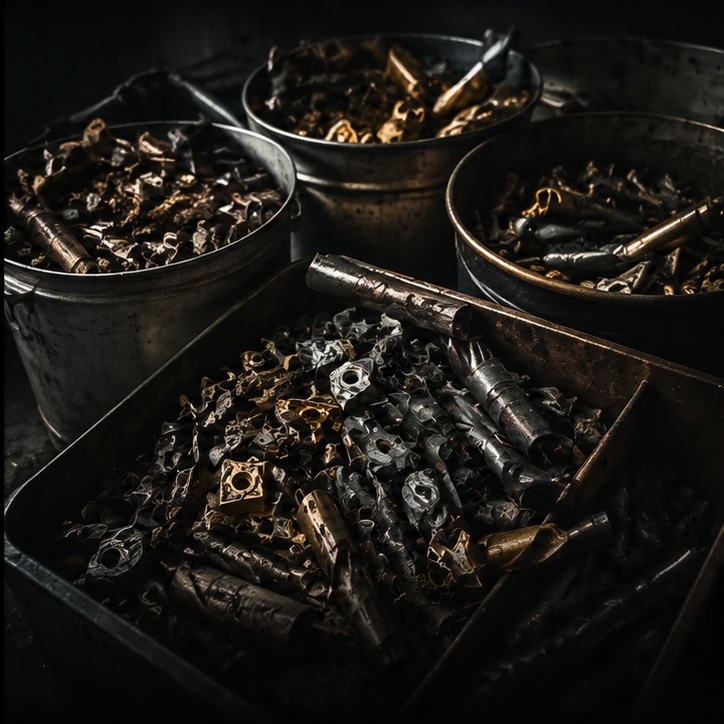
You do not need a laboratory — just a workbench and a little patience. These simple steps consistently turn the same weight of material into a better offer.
Carbide is identified visually before it is ever weighed or tested. The quality of your photos directly determines the speed and accuracy of your quote.
A blurry photo of a dark bucket tells us nothing. A clear, well-lit photo of inserts with visible markings next to a tape measure tells us almost everything — material family, likely grade tier, form mix, and approximate quantity. Take photos in daylight or under bright shop lights, wipe coolant off the pieces you photograph up close, and send several angles rather than one distant shot.
Along with the pictures, send your estimated weight, your city and state, whether this is a one-time cleanout or recurring shop volume, and your timing. The more complete the picture, the faster the review — most quotes go out the same day the details arrive.
Email sjohns@ironcrestindustrialsurplus.com or call 312-880-8174. Include material type, estimated weight, markings, your city and state, and your timing.
Ironcrest identifies the material, grade family, form mix, and quantity from your photos and description — no obligation and no stale price charts.
You receive an offer based on current tungsten markets and the specifics of your lot. Markets move, so every quote reflects the day it is made.
Depending on lot size and economics, Ironcrest can discuss local coordination or mail-in instructions for smaller, properly packaged lots.
Sell carbide scrap and tooling →
Tungsten markets move with global supply and demand, so any fixed number on a website goes stale fast. Your lot's value also depends on grade, form, quantity, and sorting — two buckets that look similar can price differently. Send photos for today's price instead of relying on an outdated chart.
Clean, sorted solid carbide — end mills, drills, blanks, and rods — generally sits at the top because of its high, consistent tungsten content and easy verification. Inserts are a strong second tier. Brazed tooling follows the carbide share of its weight, and grinding sludge or swarf is typically the lowest tier because it is the most expensive form to process.
You don't have to sort it perfectly, but basic separation pays. Pull out high-speed steel, plain steel parts, packaging, and coolant-soaked debris, and group inserts, solid tools, brazed tooling, and sludge separately. Sorted, dry, clearly photographed lots consistently earn better offers than mixed drums of the same weight.
Yes — it contains recoverable tungsten, but it is evaluated differently than solid tooling. Moisture, oil, and coolant content all reduce net recovery, so keep it separate from solid scrap and as dry as practical. Large or ongoing volumes may be evaluated by laboratory assay. Send photos and details for today's price.
Check markings and manufacturer part numbers first — they identify the material definitively. By feel, solid carbide is remarkably dense; the same-size carbide tool feels noticeably heavier than a high-speed steel one. Coatings and color alone are not reliable. When in doubt, send close photos of the markings and the full tool for review.
Send photos, estimated weight, material type, and location for today’s price. Email sjohns@ironcrestindustrialsurplus.com or call 312-880-8174.
Carbide lots vary enormously in composition, and the difference between grades and forms is real money. Clear photos and markings help determine exactly what you have before any offer is made.
Photograph the material, nameplates and quantity, then send them through the quote form, by email or by phone.
We review what the material is, its condition and quantity, and whether it fits a direct purchase.
For qualifying material, we discuss a direct purchase offer and the next steps.